BRAND IDENTITY
TrainUp Brand
TrainUp Brand
Before the app. Before the store. There was a brand. Every color, every typeface, every design decision in the TrainUp ecosystem started here.
Before the app. Before the store. There was a brand. Every color, every typeface, every design decision in the TrainUp ecosystem started here.
Case Study
Branding
Visual Design
Design Systems
B2C
MY ROLE
UX/UI Designer
UX/UI Designer
TOOLS
Figma · PS · Affinity
Figma · PS · Affinity
TYPE
Concept Project
Concept Project
the brief
A brand built from a feeling
A brand built from a feeling
TrainUp started with a name, before there was a product or a brief. A name that says exactly what it means: train up, get better, keep moving forward. Everything else had to match that feeling.
Most fitness brands felt cold, aggressive, or out of reach. I wanted something different: a brand that feels human and relatable, but still has energy. Something that motivates you without intimidating you.
That was the only brief. Build a brand that feels like it’s on your side.
TrainUp started with a name, before there was a product or a brief. A name that says exactly what it means: train up, get better, keep moving forward. Everything else had to match that feeling.
Most fitness brands felt cold, aggressive, or out of reach. I wanted something different: a brand that feels human and relatable, but still has energy. Something that motivates you without intimidating you.
That was the only brief. Build a brand that feels like it’s on your side.
the problem
Fitness brands all look like they’re yelling at you
Fitness brands all look like they’re yelling at you
Look at most fitness brands and you’ll see the same thing: aggressive typography, high contrast, dark colors, and images that make you feel inadequate before you even start. They’re designed to intimidate, not to invite.
And it’s more than how they look. It’s how they make you feel. These brands have no personality, no warmth, nothing that makes you feel like they’re on your side.
So TrainUp had a specific design challenge: feel energetic without being aggressive, and colorful without looking cheap or childish. That balance is harder than it sounds.
Look at most fitness brands and you’ll see the same thing: aggressive typography, high contrast, dark colors, and images that make you feel inadequate before you even start. They’re designed to intimidate, not to invite.
And it’s more than how they look. It’s how they make you feel. These brands have no personality, no warmth, nothing that makes you feel like they’re on your side.
So TrainUp had a specific design challenge: feel energetic without being aggressive, and colorful without looking cheap or childish. That balance is harder than it sounds.
How might we build a fitness brand that energizes people instead of intimidating them?
How might we build a fitness brand that energizes people instead of intimidating them?
The goal wasn’t to be louder. It was to be different.
The goal wasn’t to be louder. It was to be different.
the PROCESS
Every decision had a reason
Every decision had a reason
It was always going to end in “Up”
It was always going to end in “Up”
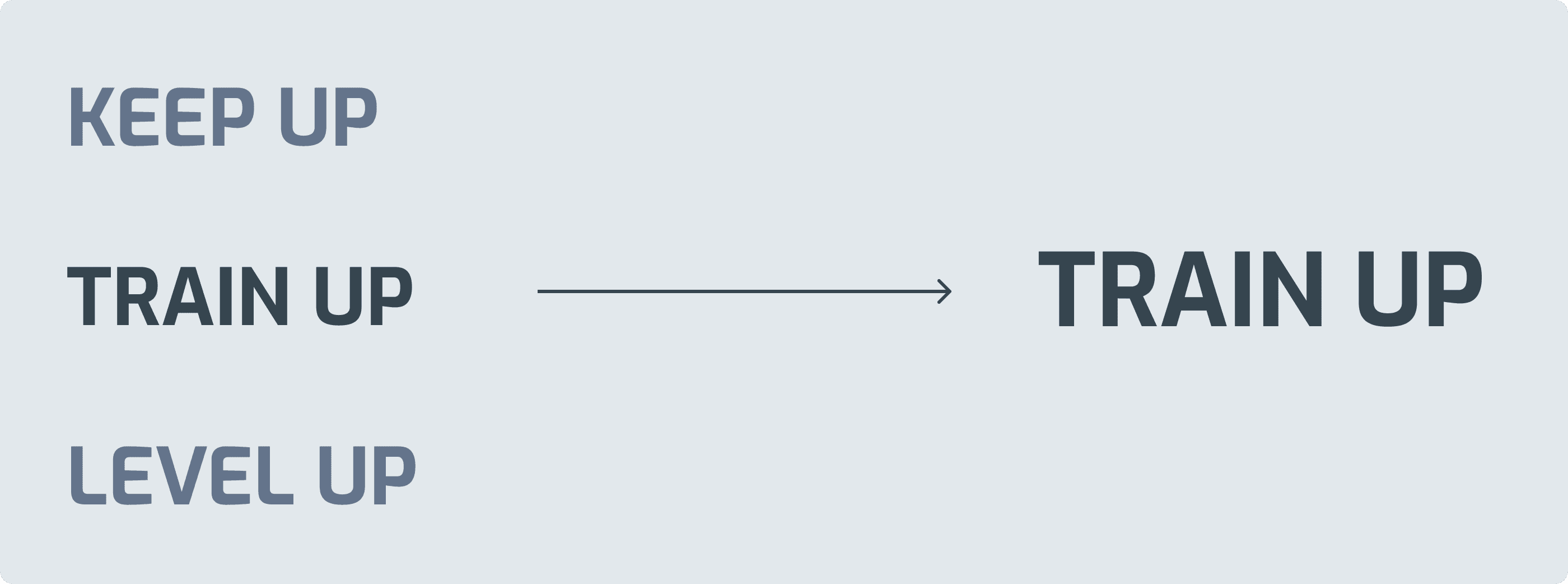
I had three options: Level Up, Keep Up, and Train Up. They were different, but they all pointed in the same direction. The “Up” was never negotiable. It was the whole idea: getting better, building momentum, moving forward. Train Up won because it’s the most direct. It tells you exactly what to do.
Three options. All different — but they all pointed in the same direction. Level Up, Keep Up, Train Up. The 'up' was never negotiable. It was the whole idea — improvement, momentum, forward motion. Train Up won because it was the most direct. It tells you exactly what to do.
The name came first. Everything else had a direction to follow.
I had three options: Level Up, Keep Up, and Train Up. They were different, but they all pointed in the same direction. The “Up” was never negotiable. It was the whole idea: getting better, building momentum, moving forward. Train Up won because it’s the most direct. It tells you exactly what to do.
The name came first. Everything else had a direction to follow.
The name came first. Everything else had a direction to follow.
From wordmark to mark
The arrow was never decorative
The TP monogram combines two letters into one mark, but the arrow is the real idea. It points up and forward. That’s the whole brand in one shape: train up, move forward. Every time someone sees the mark, that’s what it says.
One shape, one direction, the whole brand.

Energy without aggression
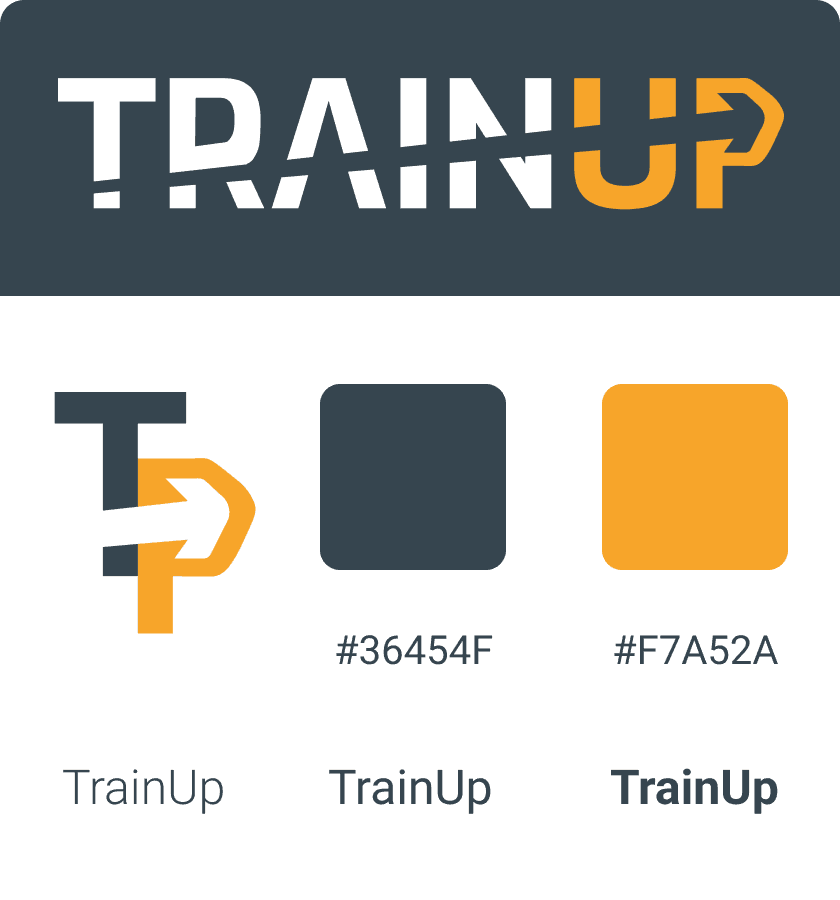
The color system had to solve one problem: feel energetic without feeling aggressive. The deep blue-grey grounds the brand and gives it calm and credibility. The orange brings the energy, but it’s warm, not loud. Together they feel focused and human, not intimidating.
The final colors weren’t my first choice. I tested different combinations with the same mark, and the decision wasn’t only about what looked good. Color psychology played a big role. The deep blue-grey communicates trust, stability, and focus. The warm orange brings energy, optimism, and movement. Together they say exactly what TrainUp stands for. Accessibility mattered too. Orange alone failed contrast checks, so the blue-grey became the primary color and orange moved to accents.
Two colors. One does the talking. The other holds it together.
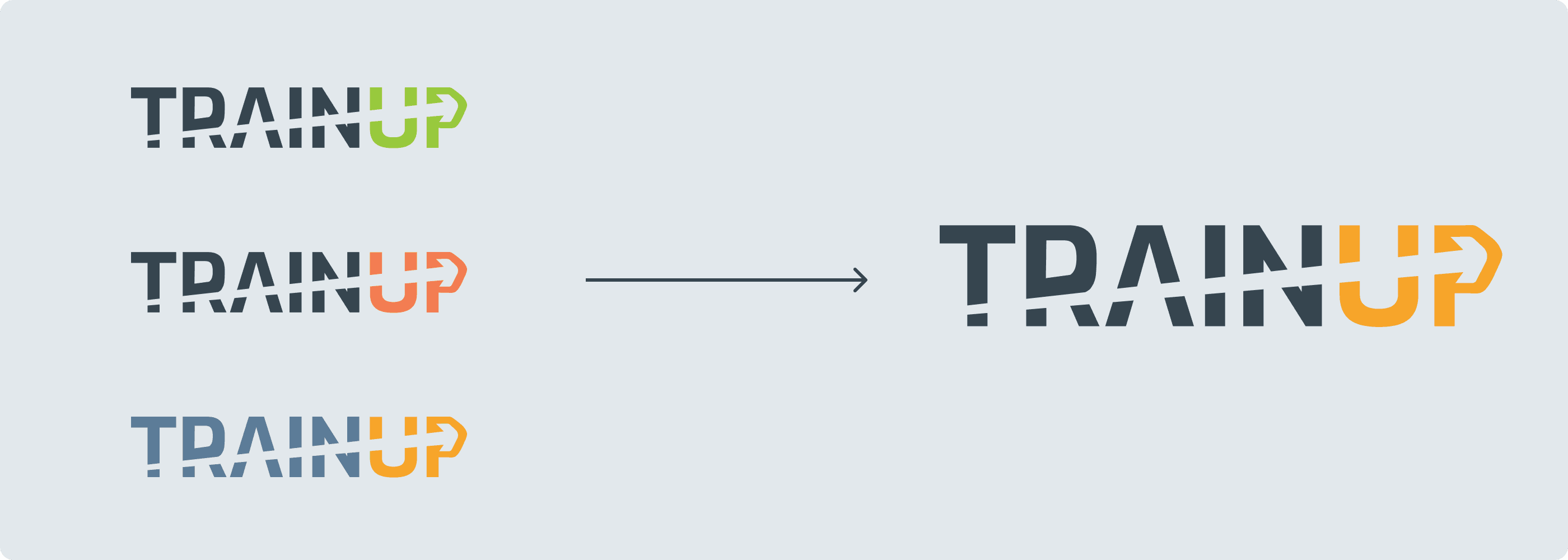

The wordmark came first. I tried many versions: different weights, different arrow treatments, different ways to make TRAINUP feel like it was moving forward.
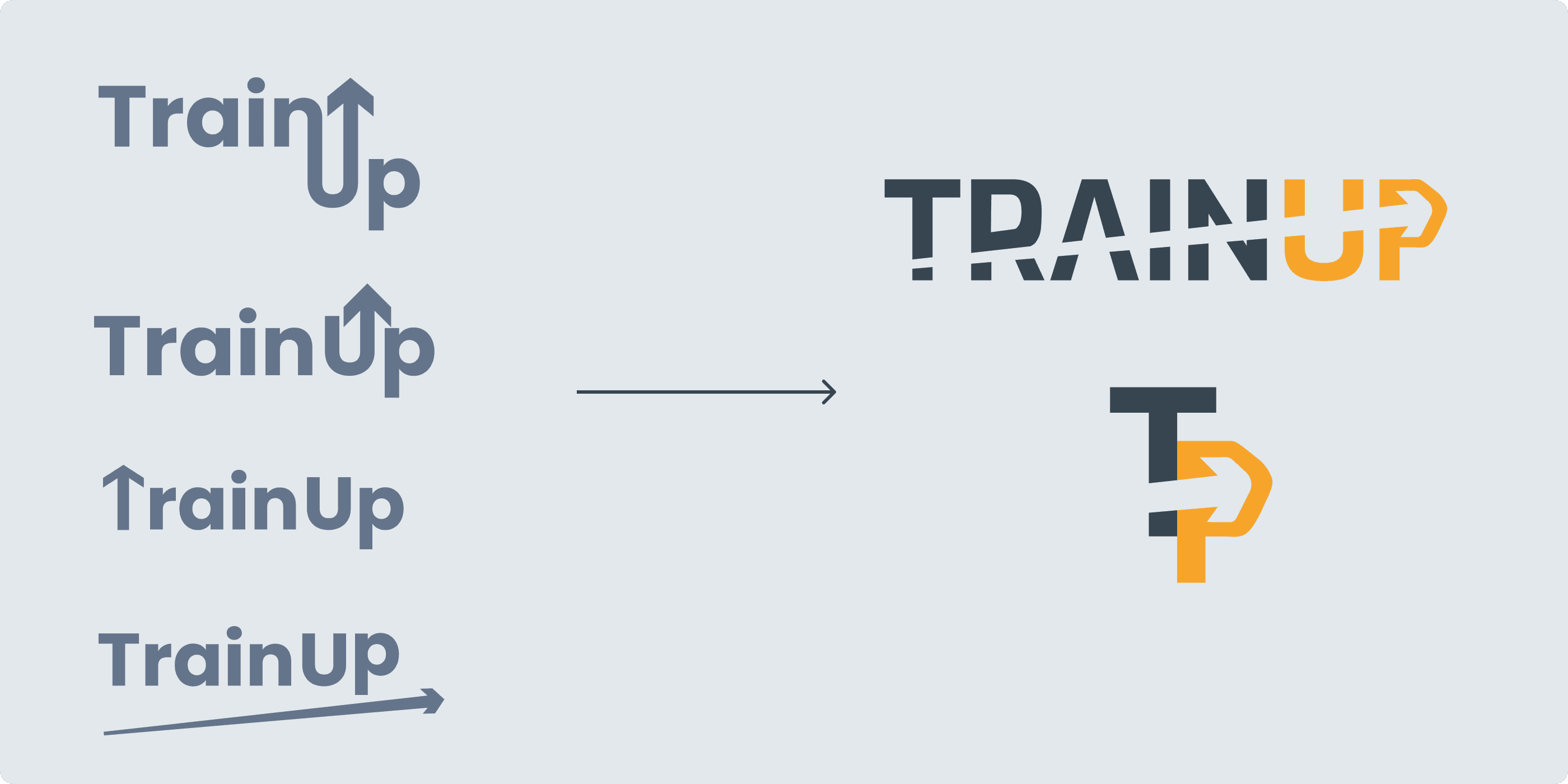
Once the wordmark was set, the TP monogram came naturally as a compact version of the same idea. Same energy, smaller size.
The monogram isn’t a separate idea. It’s the same idea in its simplest form.
The arrow was never decorative
The TP monogram combines two letters into one mark, but the arrow is the real idea. It points up and forward. That’s the whole brand in one shape: train up, move forward. Every time someone sees the mark, that’s what it says.
One shape, one direction, the whole brand.
Energy without aggression
From wordmark to mark
The color system had to solve one problem: feel energetic without feeling aggressive. The deep blue-grey grounds the brand and gives it calm and credibility. The orange brings the energy, but it’s warm, not loud. Together they feel focused and human, not intimidating.
The color system had to solve one problem: feel energetic without feeling aggressive. The deep blue-grey grounds the brand and gives it calm and credibility. The orange brings the energy, but it’s warm, not loud. Together they feel focused and human, not intimidating.
The final colors weren’t my first choice. I tested different combinations with the same mark, and the decision wasn’t only about what looked good. Color psychology played a big role. The deep blue-grey communicates trust, stability, and focus. The warm orange brings energy, optimism, and movement. Together they say exactly what TrainUp stands for. Accessibility mattered too. Orange alone failed contrast checks, so the blue-grey became the primary color and orange moved to accents.
Two colors. One does the talking. The other holds it together.
The wordmark came first. I tried many versions: different weights, different arrow treatments, different ways to make TRAINUP feel like it was moving forward.
Once the wordmark was set, the TP monogram came naturally as a compact version of the same idea. Same energy, smaller size.
The monogram isn’t a separate idea. It’s the same idea in its simplest form.
The final colors weren’t my first choice. I tested different combinations with the same mark, and the decision wasn’t only about what looked good. Color psychology played a big role. The deep blue-grey communicates trust, stability, and focus. The warm orange brings energy, optimism, and movement. Together they say exactly what TrainUp stands for. Accessibility mattered too. Orange alone failed contrast checks, so the blue-grey became the primary color and orange moved to accents.
Two colors. One brings the energy, the other holds it together.
Two typefaces, one job each
Two typefaces, one job each
Roboto was the obvious choice for everything else. Clean, modern, and functional. It doesn’t fight for attention. The logo uses Exo Bold for its personality and energy, and Roboto handles everything else: UI, body text, and labels across the app, the store, and every touchpoint in the ecosystem.
Roboto was the obvious choice for everything else. Clean, modern, and functional. It doesn’t fight for attention. The logo uses Exo Bold for its personality and energy, and Roboto handles everything else: UI, body text, and labels across the app, the store, and every touchpoint in the ecosystem.
Personality in the logo. Clarity everywhere else.
Personality in the logo. Clarity everywhere else.
Roboto was the obvious choice for everything else. Clean, modern, and functional. It doesn’t fight for attention. The logo uses Exo Bold for its personality and energy, and Roboto handles everything else: UI, body text, and labels across the app, the store, and every touchpoint in the ecosystem.
Personality in the logo. Clarity everywhere else.

the SOLUTION
The finished identity
The finished identity
The name, the mark, the colors, and the type all came together into one cohesive system.
A brand that feels energetic but not aggressive, human but not soft, and flexible enough to work across an app, a store, and every touchpoint in between.
The name, the mark, the colors, and the type all came together into one cohesive system.
A brand that feels energetic but not aggressive, human but not soft, and flexible enough to work across an app, a store, and every touchpoint in between.
A brand that knows what it is, and looks like it.
A brand that knows what it is, and looks like it.
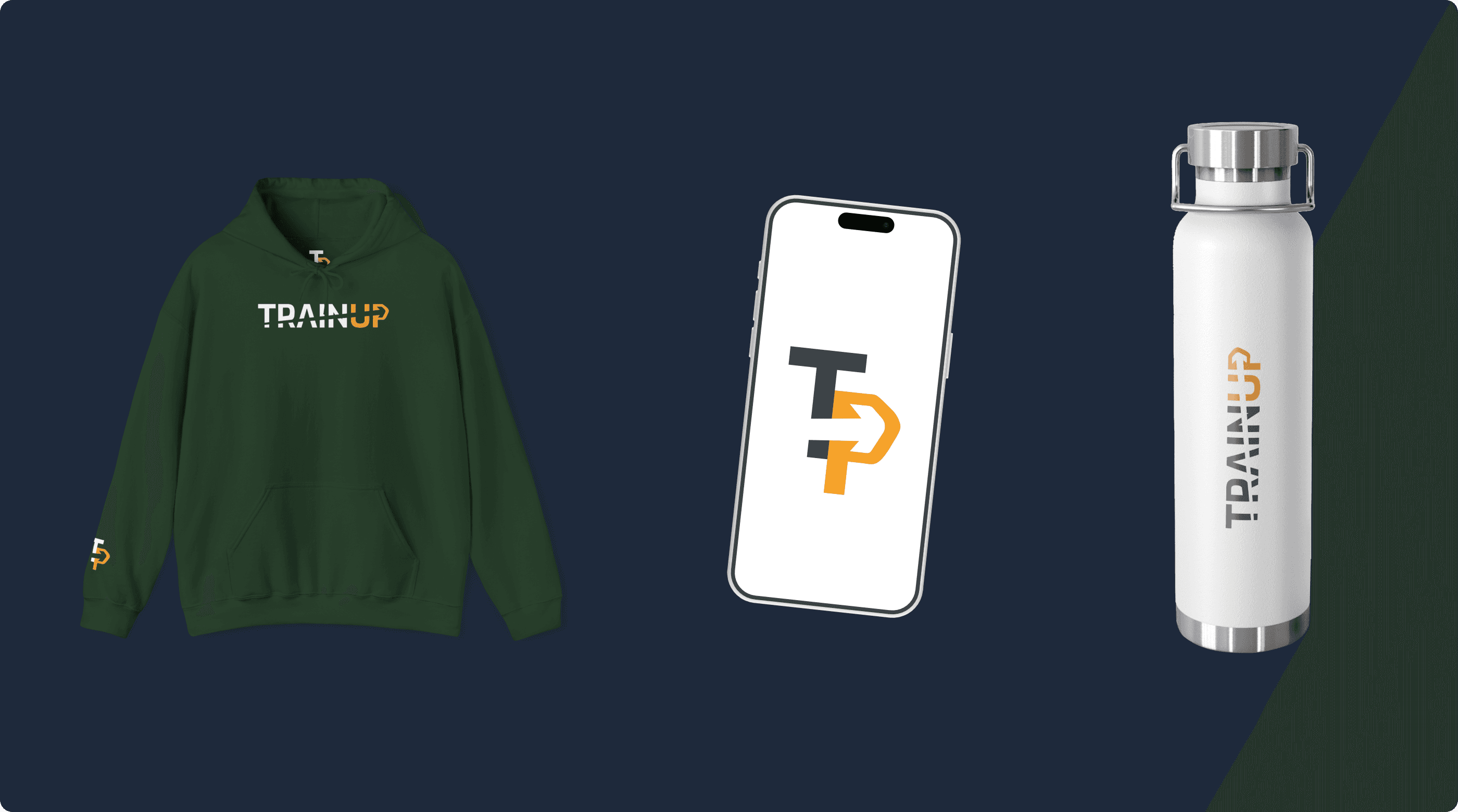
Merch isn’t limited to the core palette, as long as the logo stays consistent.
Merch isn’t limited to the core palette, as long as the logo stays consistent.
the ecosystem
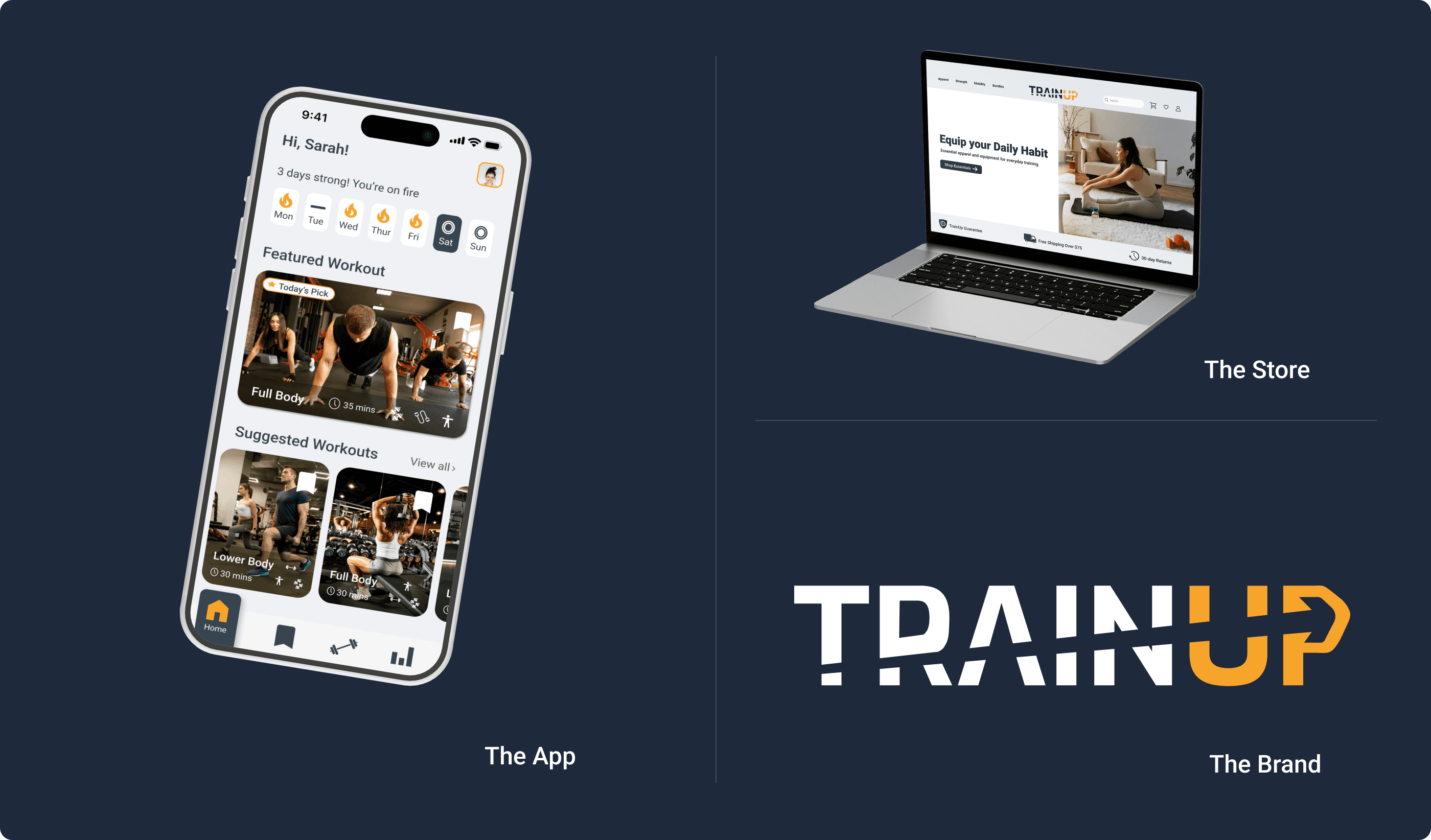
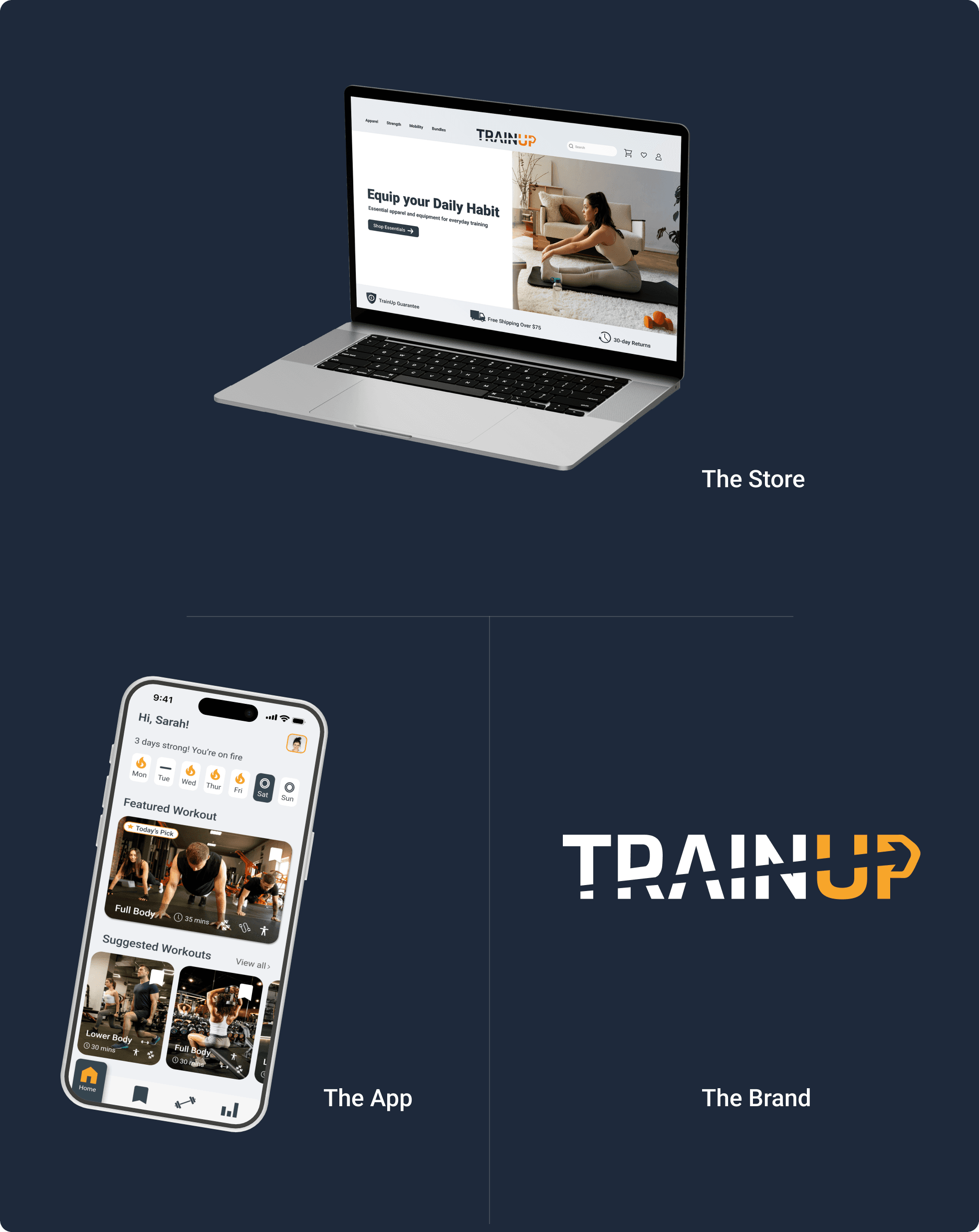
One brand, three connected products
One brand, three connected products
The brand identity came first. It’s the foundation for the app and the store, so every color, typeface, and design decision in both products starts here.
The brand identity came first. It’s the foundation for the app and the store, so every color, typeface, and design decision in both products starts here.
The connection
The brand identity is the foundation. Every color, typeface, and design decision in the app and the store comes from it. So TrainUp isn’t three projects with the same name. It’s one ecosystem with three ways in.
The brand identity is the foundation. Every color, typeface, and design decision in the app and the store comes from it. So TrainUp isn’t three projects with the same name. It’s one ecosystem with three ways in.
How they work together
A user downloads TrainUp and starts working out at home. Over time, they want better equipment. The store is the next step, organized around the same goals the app already knows about them.
Or a user finds TrainUp through the store, and the app becomes their next step. Each product leads to the other, which helps keep users that one product alone might lose.
A user downloads TrainUp and starts working out at home. Over time, they want better equipment. The store is the next step, organized around the same goals the app already knows about them.
Or a user finds TrainUp through the store, and the app becomes their next step. Each product leads to the other, which helps keep users that one product alone might lose.
The Visual System
The app, the store, and the brand share the same colors, typography, and design language. Moving between the app and the store feels like the same place. That’s the design system doing its job.
The app, the store, and the brand share the same colors, typography, and design language. Moving between the app and the store feels like the same place. That’s the design system doing its job.
The identity didn’t follow the products. The products followed the identity.
the REFLECTION
What building a brand taught me
What building a brand taught me
What I'm Most Proud Of
What I'm Most Proud Of
The name. It sounds like the smallest decision, but it was the most important one. The mark, the colors, and the type all had a direction to follow because the name already said what the brand was about. That clarity made every decision after it easier.
The name. It sounds like the smallest decision, but it was the most important one. The mark, the colors, and the type all had a direction to follow because the name already said what the brand was about. That clarity made every decision after it easier.
What I'd Do Differently
What I'd Do Differently
I’d spend more time exploring. The final identity is strong, but I moved to execution pretty quickly. More name options, more mark directions, and more color combinations would have made the final decisions even more confident.
I’d spend more time exploring. The final identity is strong, but I moved to execution pretty quickly. More name options, more mark directions, and more color combinations would have made the final decisions even more confident.
What's Next
Apply the identity to more touchpoints, like marketing materials, social media templates, and packaging. The brand is built to grow. It just hasn’t been fully tested yet.
Apply the identity to more touchpoints, like marketing materials, social media templates, and packaging. The brand is built to grow. It just hasn’t been fully tested yet.
A brand is more than a logo. It’s the story behind it and the feeling it leaves.